




The majority of everyday chemical exposure in people occurs through the air we breathe in our homes, offices, schools and other indoor environments. These airborne chemicals are commonly referred to as volatile organic compounds (VOCs), used to manufacture and maintain building materials, interior furnishing, cleaning products and personal care products. The U.S. Environmental Protection Agency (EPA) and other researchers have conducted studies and found that VOCs are common in indoor environments and that their levels may be two to a thousand times higher than outdoors.
There may be anywhere from 50 to hundreds of individual VOCs circulating in indoor air at any time. Some may produce objectionable odors at low levels, but many have no noticeable smell. Many VOCs are irritants and can cause headaches; eye, nose and throat irritation; and dizziness. Long-term exposure to certain VOCs may lead to chronic diseases or cancer. The products that we use to build and furnish our indoor environments can have a significant impact on indoor air pollution levels.
Our UL GREENGUARD Certification program has established test methods and emission limits for a variety of product groups, including:

Vehicles

Furniture

Flooring

Building materials

Electronic equipment

Interiors

Cleaning products
You can choose from two tiers of certification: UL GREENGUARD Certification and UL GREENGUARD Gold Certification.
Standard UL GREENGUARD Certification
The EPA and the state of Washington initially used UL GREENGUARD Certification emissions limits as purchasing specifications for furniture and commercial building products. UL GREENGUARD Certification criteria have served as the basis for the Leadership in Energy and Environmental Design (LEED) credit for low-emitting furniture since 2002. Office furniture products that are UL GREENGUARD Certified also comply with the Business and Institutional Furniture Manufacturer’s Association (BIFMA) X7.1 standard.
UL GREENGUARD Gold Certification
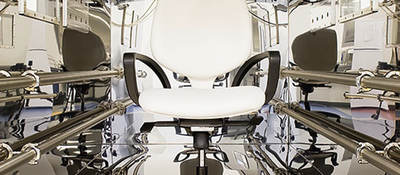
The UL GREENGUARD Gold Certification Standard includes health-based criteria for additional chemicals and also requires lower total VOC emissions levels to ensure that products are acceptable for use in environments such as schools and healthcare facilities. In addition to limiting emissions of more than 360 VOCs and total chemical emissions, UL GREENGUARD Gold Certified products must also comply with requirements of the state of California Department of Public Health (CDPH) Standard Method for the Testing and Evaluation of Volatile Organic Chemical Emissions from Indoor Sources Using Environmental Chambers, also known as California Section 01350.
All certified products are subject to a review of the manufacturing process and routine testing to minimal impact on the indoor environment.
VOC testing creates customer peace of mind
More than ever, consumers want products that contribute to healthy environments and don’t have hidden impacts on health. People understand that human health is paramount. As people reflect on their indoor environments, indoor air quality (IAQ) represents a growing concern.
Retailers and brands are seeking out UL GREENGUARD Certified products to appeal to health- and environment-conscious consumers and gain market share, not only in the U.S., but globally.
The UL GREENGUARD Certification Mark communicates that representative samples of a product have undergone rigorous scientific testing to meet stringent chemical emissions requirements. This certification gives retailers and manufacturers a distinct competitive advantage in the marketplace, demonstrating their commitment to people and the environment.
Show commitment to more sustainable buildings and materials
UL GREENGUARD Certification helps manufacturers make and market products with low chemical emissions and that contribute to healthier indoor air. More than 450 federal purchasers, retailers, green building rating tools and building codes around the world recognize, refer to and prefer UL GREENGUARD Certified products.
Numerous building programs, standards and specifications worldwide recognize and refer to the UL GREENGUARD Certification program. Products with UL GREENGUARD Certification or UL GREENGUARD Gold Certification can contribute to achieving points in established green building rating systems such as LEED, Building Research Establishment Environmental Assessment Method (BREEAM), Fitwel and others; satisfy code or ordinance criteria; and meet IAQ-specific request for proposal (RFP) requirements.
The benefits of UL GREENGUARD Certification
As a global safety science leader, UL Solutions apply our recognized expertise in indoor air quality (IAQ) by empowering retailers and product manufacturers to demonstrate that their products are healthier and have low chemical emissions. That helps them show their commitment to health and sustainability and gain a competitive advantage.
- UL Solutions is a globally recognized leader in indoor air quality.
- UL Solutions ranks No. 1 with consumers in India, China, Korea, Japan and the U.S. (strong majority around the world prefer UL).1
- Certifies products for low chemical emissions.
- Based on rigorous, scientific standards.
- GREENGUARD Gold Certified means products are built to contribute to safer, healthier air.
- GREENGUARD Gold Certified products are low-emitting and contribute to cleaner indoor air for you and your family.
- Certified products are screened for more than 15,000 VOCs known to pollute indoor air.
1 Source: Global Brand Valuation Research 2016
The GREENGUARD Certification Program is a proprietary program owned by UL Solutions. UL Solutions is the only owner, operator and issuer of the GREENGUARD Certification and Marks.
UL Solutions GREENGUARD Certification is the No. 1 testing program for products built to contribute to cleaner, healthier indoor air.
Watch our video to learn more.


X
Get in touch
Have questions, need specifics? Let's get this conversation started.
Please wait…
Customers stories
- Brooklyn Bedding and Helix Sleep Case Study
- Gruppo LUBE Contributes to High Performance Indoor Spaces with UL GREENGUARD Certification
- Wonderland Group is the First in Asia Pacific to Receive UL GREENGUARD Gold Certification for Car Seats
- UL Solutions Announces GREENGUARD Gold Indoor Air Quality Certification for PINTYPLUS™ Water-based Spray Paint
- Olympic House Sets New Record for Most LEED v4 Points
Related resources
- UL GREENGUARD Certification Delivers Wealth of Benefits
- What Does "GREENGUARD Certified" Mean?
- Indoor Air Quality (IAQ)
- Chemicals that Affect Indoor Air
- Tips to Improve Indoor Air Quality
- UL SPOT Product Database
- Factors Influencing IAQ in Residential and Commercial Spaces
- UL GREENGUARD Certification for Building Materials